Simple, practical advice from our technicians: how to spot dirty air conditioning, look after it yourself between services, set it up properly in summer and winter… and know when to call in a professional.
Switching your AC to heating mode: the right habits before winter
A reversible air conditioner heats very efficiently… provided it's clean. Over the summer, the moisture from cooling has fed bacteria and mould inside the unit. The first time it starts up in heating mode, the warm air puts them back into circulation: that's often when the infamous "old socks" or musty smell appears.
Before the first start-up
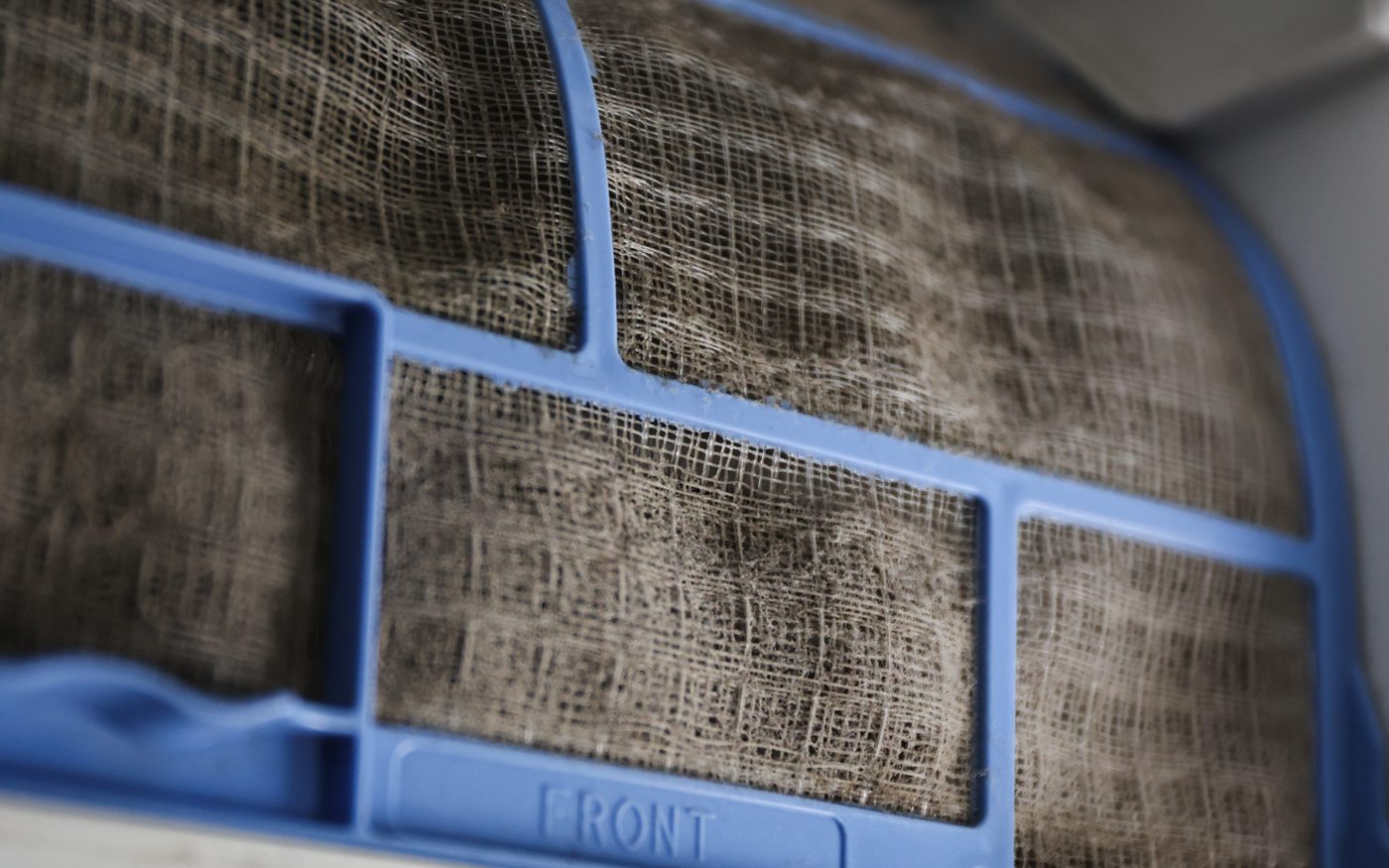
Clean the filters of each indoor unit (see our step-by-step guide below).
Clear around the outdoor unit: dead leaves, branches, objects placed in front of it.
Do a test run on heating mode for a few minutes, with a window ajar, and pay attention to the smell.
Smell still there? It's coming from inside the unit (blower wheel, heat exchanger): only a deep clean will get rid of it.
During winter
Aim for 19 °C in living areas, the recommended heating temperature in France: every extra degree shows up on your bill.
Avoid constantly switching it off and on: a stable temperature uses less energy than repeated restarts.
Never cover the outdoor unit with a protective sheet when the system is used for heating: it needs to breathe to work.
It's normal to see steam or a little water under the outdoor unit in cold weather: that's the automatic defrost.
The right time for decontamination: autumn, just after the cooling season and before switching to heating. You head into winter with a healthy unit.
It's the simplest maintenance step, and it makes a real difference to air quality and energy use. Allow around ten minutes per unit.
Step by step
Switch the unit off with the remote, then at the circuit breaker if you can.
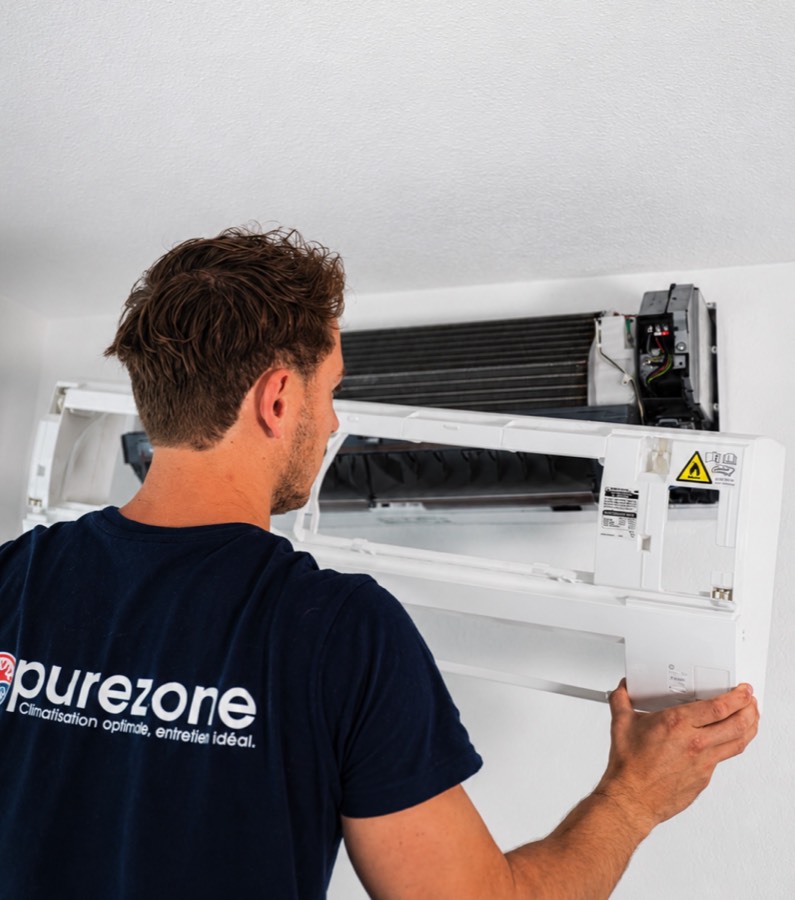
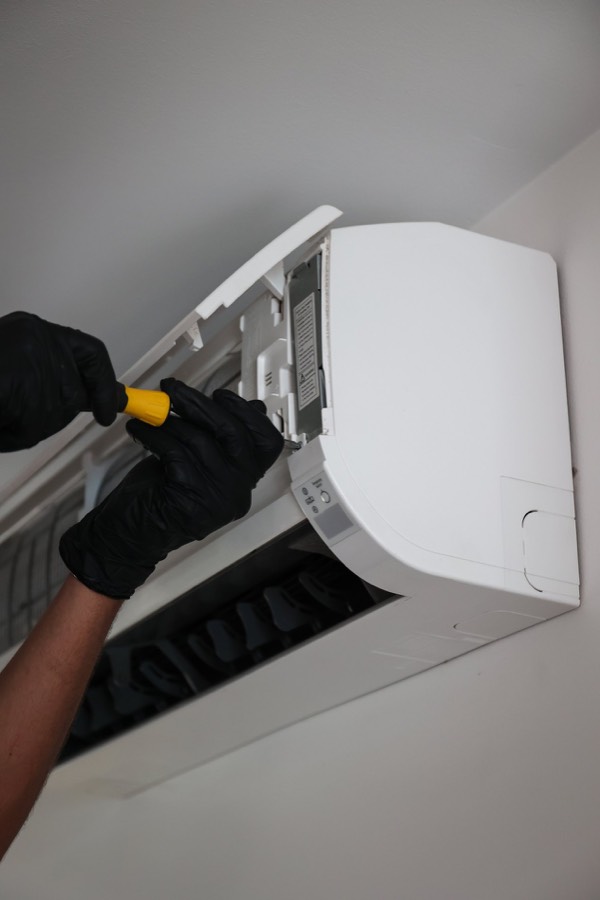
Lift the front cover of the indoor unit: on most models it lifts up and locks in the raised position.
Remove the filters by sliding them downwards, without forcing.
Vacuum the dust off them, then rinse them in lukewarm water, with a little mild soap if needed.
Let them dry completely in the open air, in the shade (never in the sun or with a hairdryer, which warps them).
Put them back in place, close the cover and switch back on.
How often? Every 2 to 4 weeks when the AC is running a lot, and at least at every change of season. Check your manufacturer's manual too.
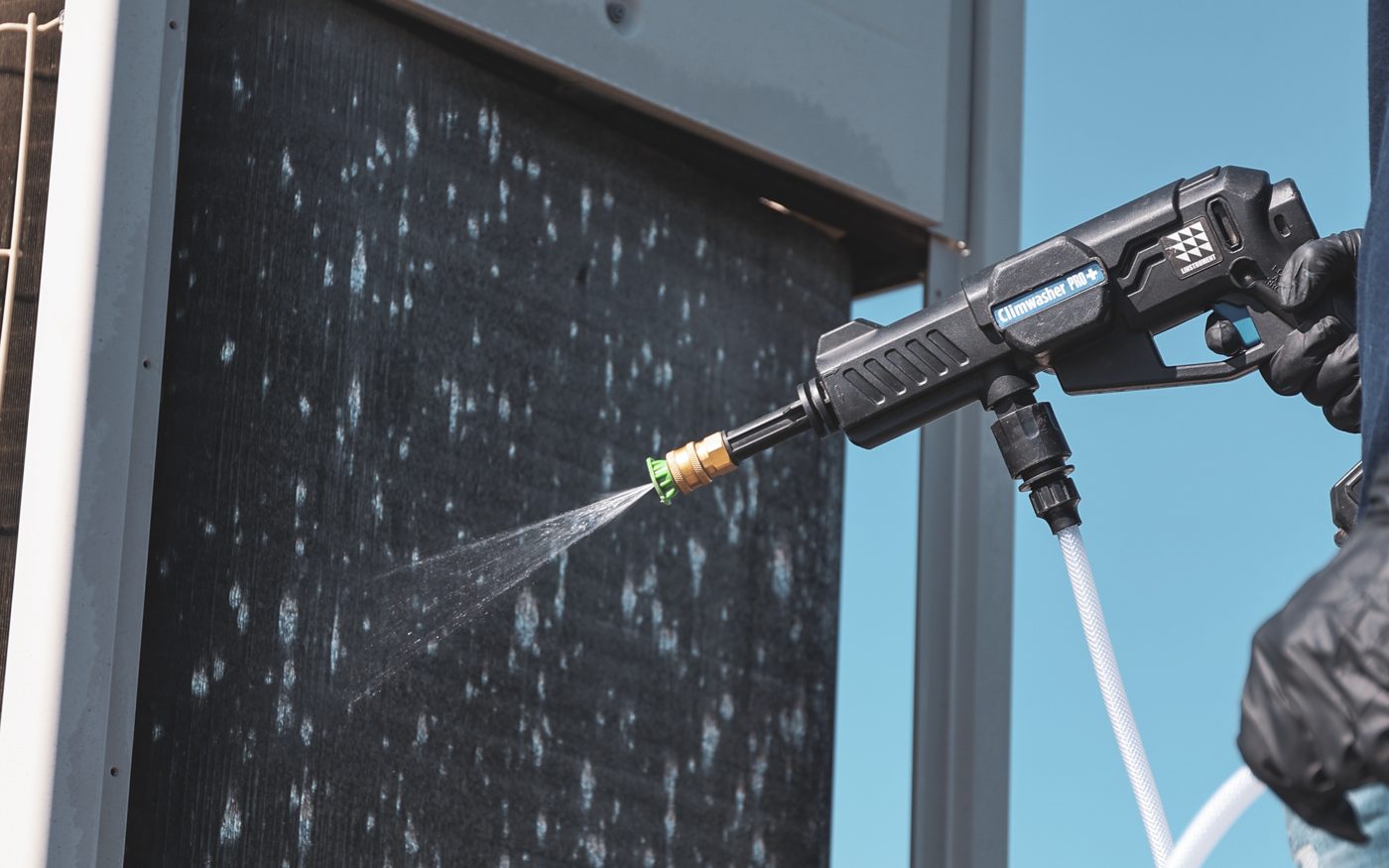
What not to do: pressure washers, harsh household products or “disinfectant” sprays applied at random, dismantling the blower wheel. You risk damaging the unit without reaching the dirt that matters.
The filters are your job. The inside of the unit is ours.
The filter stops large dust particles. But everything that gets through (fine dust, pollen, spores, cooking grease) settles further in, in damp, dark areas where bacteria and mould thrive:
The heat exchanger, the thin metal fins that cool or warm the air;
The blower wheel, the cylinder that blows air into the room;
The condensate tray and drain, where water stagnates.
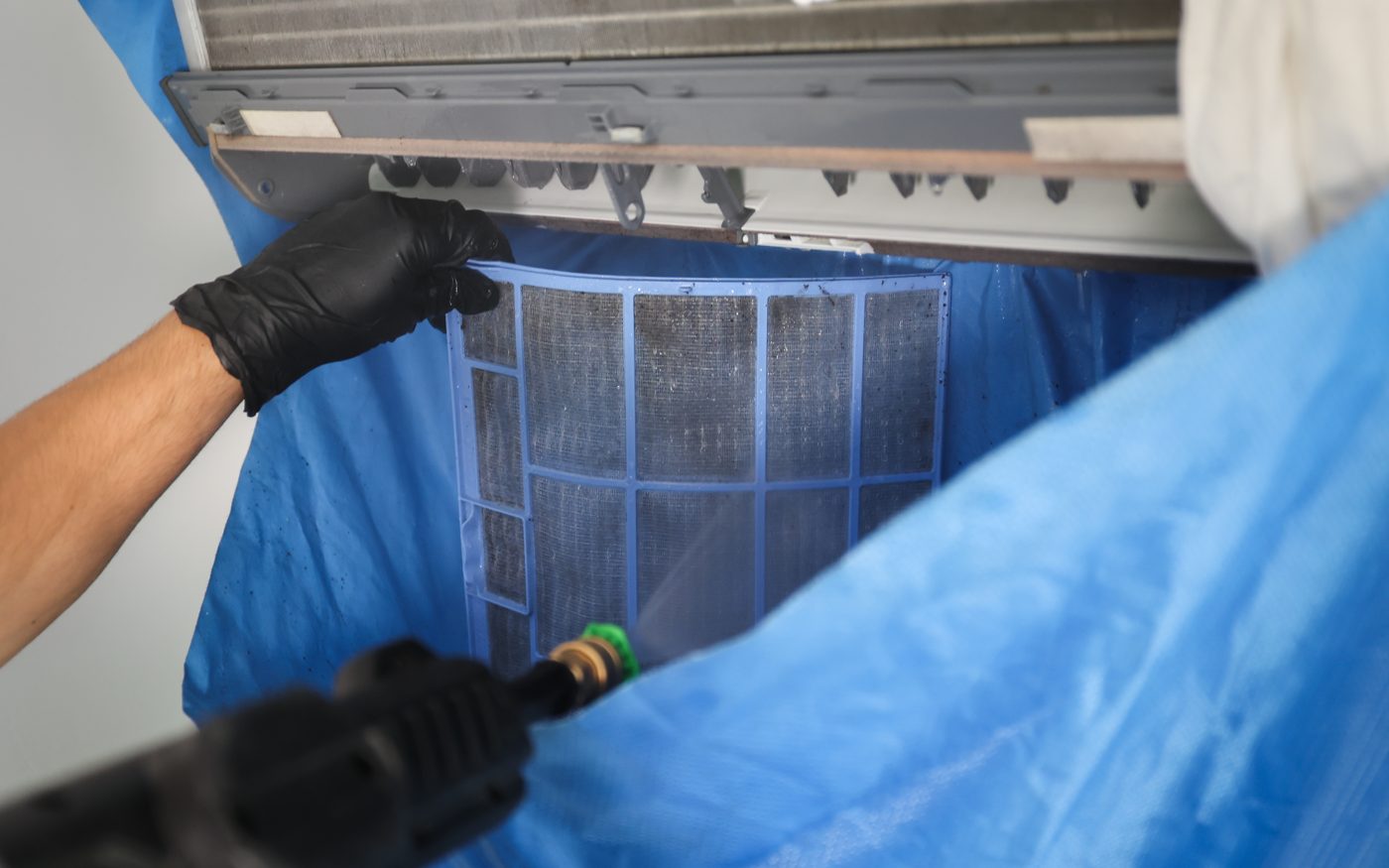
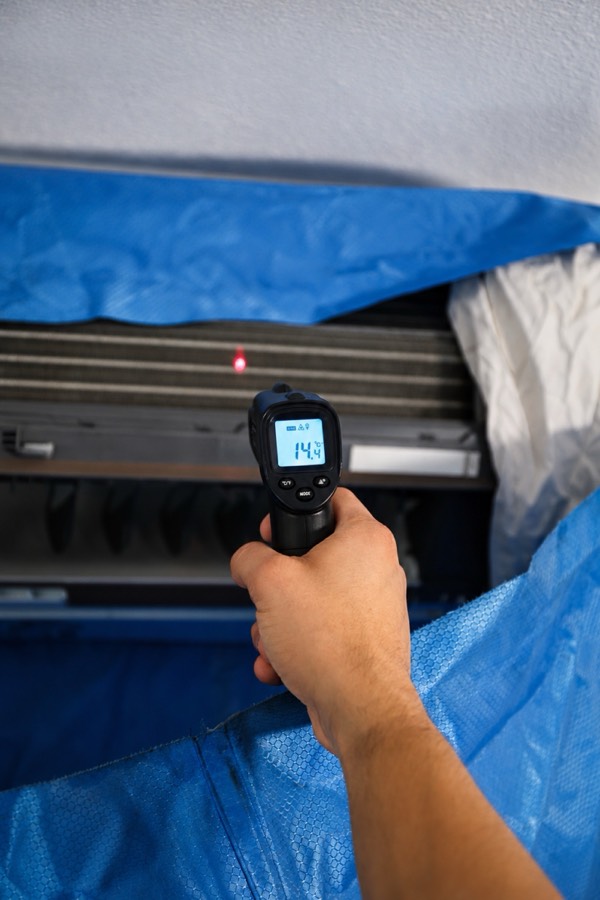
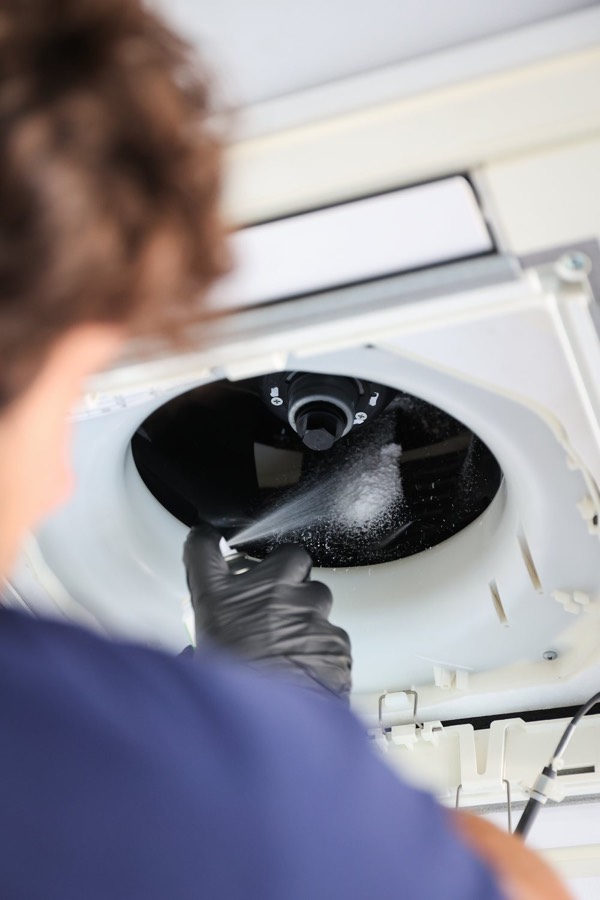
These parts can't be reached without dismantling and can't be cleaned with a cloth. That's exactly what a decontamination treats: full protection of your interior, application of a decontamination product, then a deep rinse. You see the result straight away: the water comes out black.
In short: cleaning your filters is everyday hygiene. Decontamination is the big annual clean that tackles the source of odours and allergens.
Want to see what your AC is hiding? Quote in under 30 min.
Getting your AC settings right in summer (and paying less)
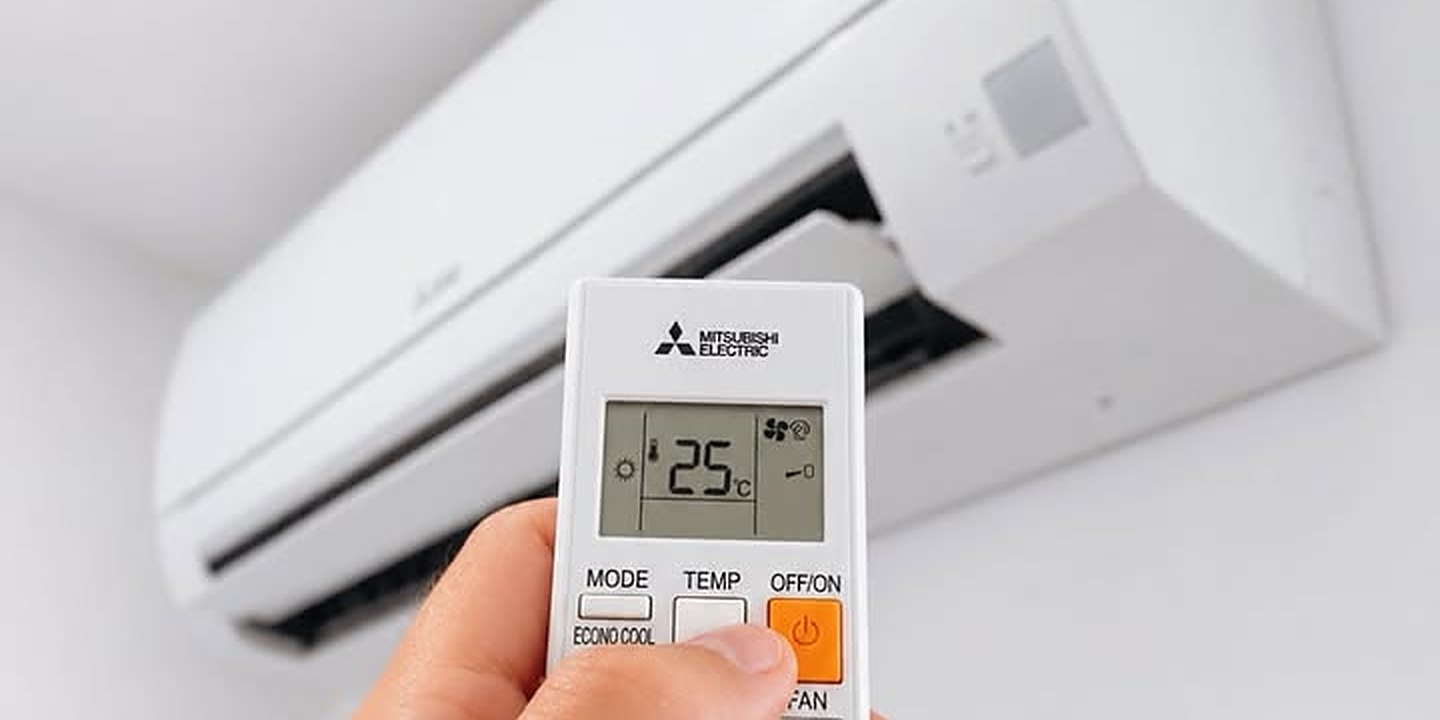
Aim for 26 °C, not 18 °C. Setting it too low doesn't cool any faster and pushes up your energy use. A difference of 5 to 7 °C from the outside temperature is enough for comfort and avoids thermal shock.
Use “Dry” (dehumidify) mode in muggy weather: drier air feels cooler at the same temperature.
Close the doors and windows of the air-conditioned room, and lower shutters or blinds during the hottest hours.
Point the airflow upwards in cooling mode: cool air naturally sinks and won't blow straight down on you.
Try night / sleep mode, which gently raises the temperature while you sleep.
A clean AC unit uses less energy: clogged filters and a dirty heat exchanger force the unit to work harder for the same result.
Shops, offices, restaurants: why servicing should be more frequent
In commercial premises, air conditioning runs for longer, for more people, and often in heavier air (cooking grease, dust, footfall). So it gets dirty much faster than at home.
Image and comfort: a bad smell at opening time is instantly noticed by your customers and your staff.
Continuity: a well-serviced AC unit is less likely to break down in the middle of summer, at the worst possible moment.
Traceability: a before/after report after every visit helps you track the condition of your installations, site by site.
Organisation: services are scheduled before opening or after closing so your business isn't disrupted.
Multiple sites? A single point of contact coordinates all your services, with a maintenance contract tailored to your network.